The DNA of Japanese Game Design: How Osaka and Kyoto Rewired the Way the West Makes Games
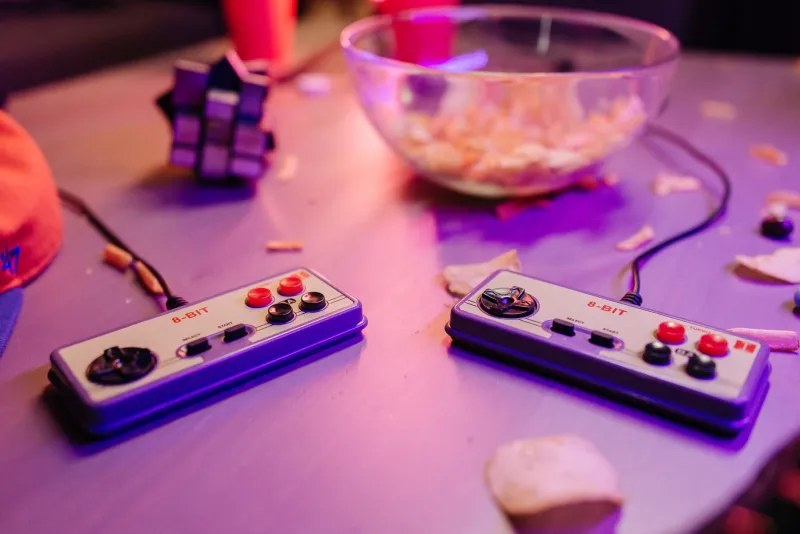
Picture this: It's 1987, and a kid in suburban Ohio is hunched over a CRT television, controller in hand, grinding through the same dungeon for the fourth time. He doesn't know it yet, but the people who built that dungeon — a small team in Kyoto working under fluorescent lights and impossible deadlines — are planting seeds that will bloom into the entire landscape of modern Western game design.
That's the thing about influence. It rarely announces itself. It just shows up one day, baked into the texture of everything you love.
Before "UX" Was a Thing, Japan Was Doing It
The concept of User Experience design didn't go mainstream in the tech world until the 2000s. But flip back through the catalogs of Nintendo, Capcom, and Konami from the late '80s and early '90s, and you'll find something remarkable: games that were obsessively engineered around how a player feels.
Shigeru Miyamoto famously described his design process as starting from the sensation he wanted to create — not the mechanics, not the story, but the feeling. That's a radically human-centered approach that predates most Western design theory by decades. Super Mario Bros. doesn't just teach you how to jump; it teaches you through jumping, using level geometry as a silent instructor. No tutorial screen. No pop-up prompts. Just elegant, invisible communication.
Western developers of that era were largely building games as technical showcases — what can the hardware do? Japanese studios flipped the question: what can the player do, and how do we make them feel incredible doing it?
The Difficulty Conversation Nobody Wanted to Have (Until Japan Started It)
Here's a hot take that's actually just history: Japan figured out difficulty design before the West even knew it was a discipline.
Games like Castlevania and Mega Man weren't hard for the sake of being hard — they were hard in specific, learnable ways. Every death taught you something. Every obstacle had a logical solution baked into the design. This philosophy, which Japanese designers sometimes describe as a form of shokunin craftsmanship (the relentless pursuit of mastery in one's work), created a feedback loop where failure felt fair.
Fast forward to 2022, and Elden Ring — developed by FromSoftware — sparked a global conversation about difficulty, accessibility, and what games owe their players. That debate, which lit up Reddit threads and Twitter feeds from coast to coast, was fundamentally a Japanese design argument playing out on a Western stage. The "ganbatte" spirit — persevere, push forward, you've got this — wasn't just a cultural artifact. It became a design language that resonated with millions of American players who'd never heard the word.
Indie Developers Learned to Speak Japanese (Metaphorically)
Walk through any major indie game release on Steam or the Nintendo eShop and count how many titles wear their Japanese influences like a badge of honor. Hollow Knight's punishing-but-fair combat loop? Pure Miyazaki. Celeste's precision platforming married to emotional storytelling? It's got Yuji Naka's DNA all over it, filtered through a Canadian studio's sensibility.
Tobias Sjögren, an indie developer based in Portland who released a critically praised action-platformer in 2023, put it plainly in a developer diary post: "I basically studied Super Metroid the way film students study Kubrick. The way that game respects your intelligence while still holding your hand just enough — I wanted to bottle that."
That's not an isolated sentiment. It's a chorus. The indie boom of the 2010s was, in many ways, a love letter written by Western developers to the Japanese games that raised them.
Polished Mechanics Over Marketing Hype
Here's where things get genuinely interesting for modern gaming culture. Japanese studios — particularly Nintendo, but also Atlus, Platinum Games, and Capcom's modern incarnation — have maintained a stubborn commitment to shipping games that are finished. Polished. Coherent.
This isn't universal (no industry is), but the cultural expectation within Japanese game development has historically leaned toward a product that respects the player's time and money. You buy it, you play it, it works. The mechanic loop is tight. The controls feel responsive. The experience holds together.
Contrast that with the Western AAA landscape of the mid-2010s, where day-one patches, incomplete launches, and live-service monetization became normalized — and you can see why so many American gamers started gravitating toward Japanese releases as a kind of safe harbor. When Monster Hunter: World dropped in 2018 and became Capcom's best-selling game ever, it wasn't just because it was great. It was because it felt complete in a way that had started to feel rare.
Western studios noticed. The post-launch disaster of Cyberpunk 2077 and the backlash against No Man's Sky's original release accelerated a reckoning in Western development culture that Japanese studios had been quietly modeling for years.
Respecting Player Time: A Radical Act
One of the most underappreciated Japanese design contributions is the save system. Sounds boring, right? It's not.
The thoughtful placement of save points — a Miyamoto-era innovation that evolved into the checkpoint philosophy we rely on today — reflects something deeper: a respect for the fact that players have lives. Jobs. Kids. Commutes. The design of when and how a game lets you stop playing says everything about how much the developer values your time.
JRPGs pioneered the "save anywhere" system. Portable Nintendo titles were engineered around the idea of a 20-minute session on a bus. These weren't just features — they were philosophies about the relationship between a game and a human being.
Modern Western games have absorbed this entirely. The auto-save revolution, the checkpoint system in every major shooter, the "rest anywhere" mechanics in open-world RPGs — all of it traces back to Japanese developers asking a simple question: what does this player's day actually look like?
The Ganbatte Blueprint
The word ganbatte — the spirit of doing your best, of persevering through difficulty with effort and heart — isn't just the name of a gaming website. It's the invisible architecture underneath decades of design decisions that shaped what modern gaming is.
When a Western studio builds a game where failure is instructive rather than punishing, where mechanics are taught through play rather than text walls, where the finish line feels earned — they're working from a blueprint that was drafted in Japan, tested in arcades, refined on cartridges, and gifted to the world.
The best Western games of the past decade don't just borrow from Japanese design. They've internalized it. And as the next generation of developers grows up playing both Hades and Hollow Knight and Sekiro — the cross-pollination is only going to get richer.
Level up your love for this stuff. Because understanding where great games come from makes playing them even better.