Nobody's a Nobody: How Japanese Games Make You Care About Characters With Two Lines of Dialogue
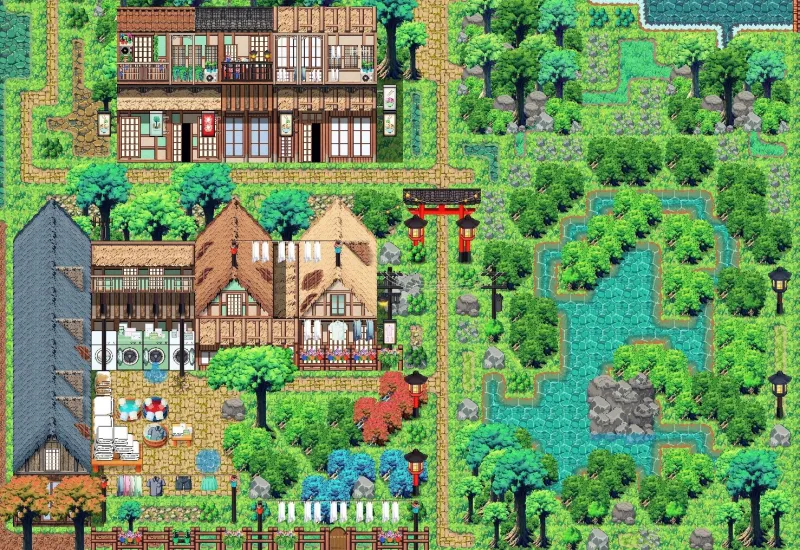
Photo: Japanese RPG village townspeople characters pixel art anime style, via img.itch.zone
You know that old fisherman standing by the dock in the first village of almost every JRPG ever made? The one who says something like, "The sea's been rough lately. My grandson worries, but I've weathered worse storms"? He doesn't have a name. He doesn't give you a quest. He'll probably never appear again. And yet—somehow—you remember him.
That's not an accident. That's craft.
Japanese game developers have been quietly perfecting the art of the meaningful background character for decades, building worlds where even the most minor NPC feels like they have a life happening just off-screen. It's one of the most underappreciated design philosophies in gaming, and it's a huge reason why Japanese RPGs, adventure games, and even action titles feel so much more alive than their Western counterparts.
The Difference Between a Quest Dispenser and a Human Being
In a lot of Western open-world games, NPCs exist on a spectrum from "gives you a mission" to "says a random line when you walk past." They're functional. They serve the gameplay loop. But they rarely feel like people with inner lives.
Japanese developers seem allergic to that approach. Even when a character has a single line of dialogue, that line is doing real work. It's not just flavor text—it's a small window into a whole person. The fisherman isn't just saying words; he's telling you he's experienced, that he has family who loves him, and that he carries a quiet kind of dignity. Three sentences. One complete human portrait.
Games like Dragon Quest, Yakuza (now Like a Dragon), and Persona have built entire reputations on this. Walk through a neighborhood in Yakuza: Like a Dragon and you'll overhear conversations between strangers, spot recurring faces in recurring spots, and notice that the city changes in small ways based on story events. The world reacts. The people inside it breathe.
Animation as Character Voice
Dialogue is only part of the equation. Japanese developers put serious thought into how minor NPCs move.
That old woman in Zelda: Breath of the Wild who rocks gently on her heels while she talks to you? The kid in Final Fantasy IX who bounces impatiently when he's excited? These aren't just idle animations slapped on to avoid the "mannequin problem" of characters standing completely still. They're personality delivery systems.
When a character has limited dialogue, body language carries the weight. A slumped posture tells you someone is grieving. A nervous hand gesture tells you someone is hiding something. An overly cheerful wave that doesn't quite reach the eyes tells you something is very wrong. Japanese animation teams understand that players read these cues instinctively, and they use that knowledge to load minor characters with emotional information that words alone couldn't convey.
It's the same principle that makes anime so effective as a storytelling medium—expression and movement communicate what dialogue doesn't need to say out loud.
The Philosophy of "Every Life Has Weight"
There's a deeper cultural thread running through this design approach, and it's worth acknowledging. Many Japanese narrative traditions—from literature to film to manga—operate on the idea that ordinary lives are inherently worthy of attention. You see it in the works of directors like Yasujirō Ozu, whose films about everyday family life are considered masterpieces precisely because they treat the mundane as sacred.
That sensibility bleeds into game design. When a Persona game takes time to give the school nurse a backstory, or when a Tales of title lets you overhear a shopkeeper arguing affectionately with their spouse, it's not padding—it's a statement. This world is full of people who matter. You just happen to be the one with the sword.
Contrast that with the tendency in some Western RPGs to populate entire cities with characters who exist purely to say "I heard there's trouble at the old mine" and then loop that line forever. It's not that Western developers lack skill—plenty of them are incredible at character writing. But the default approach often prioritizes function over humanity in a way that Japanese studios tend to resist.
When One Line Becomes a Plot Twist
Here's where Japanese NPC design gets genuinely clever: those throwaway characters sometimes circle back.
Mother 3 does this with devastating effect, building emotional connections to background characters early in the game so that what happens to them later hits like a truck. Nier: Automata practically builds its entire thematic argument around the idea that you should pay attention to the "minor" characters—because in that world, minor is a matter of perspective. Even Fire Emblem games, which have dozens of recruitable units, make sure that the ones you never recruit still feel like they existed for a reason.
This is a long game (no pun intended) approach to storytelling. Japanese developers trust players to be paying attention, and they reward that attention by making the world feel consistent and alive. When you meet a character in chapter one who seems insignificant and then encounter them again in chapter seven under completely different circumstances, it creates a sense of narrative weight that no amount of cinematic cutscenes can manufacture.
What This Means for World-Building
The cumulative effect of treating every NPC with respect is that the world itself becomes a character.
When you're playing Octopath Traveler and you take time to use the Inquire or Scrutinize abilities on random townspeople, you uncover tiny stories within stories—a baker who secretly funds the local orphanage, a guard who's writing letters to a lover in another country. None of these are main story content. None of them give you powerful loot. But they make Orsterra feel like a place that exists beyond the edges of your map.
That's the secret weapon. World-building isn't just about lore dumps and ancient histories. It's about convincing players that the world kept moving before they arrived and will keep moving after they leave. Japanese games accomplish this by making sure the people in that world feel real—even the ones you'll only ever talk to once.
Ganbatte Takeaway
Next time you're deep in a Japanese RPG, slow down in the next town you hit. Don't just sprint to the item shop and the save point. Talk to the old man by the fountain. Listen to the kids arguing about which knight is stronger. Read the notice board. None of it will level you up. All of it will make the game feel bigger.
Japanese developers put those characters there because they believe the world is worth inhabiting, not just completing. And honestly? After spending enough time in these games, it's hard not to agree.