Side Quest, Main Heart: How Japanese Games Make You Fall for Characters Who Barely Say a Word
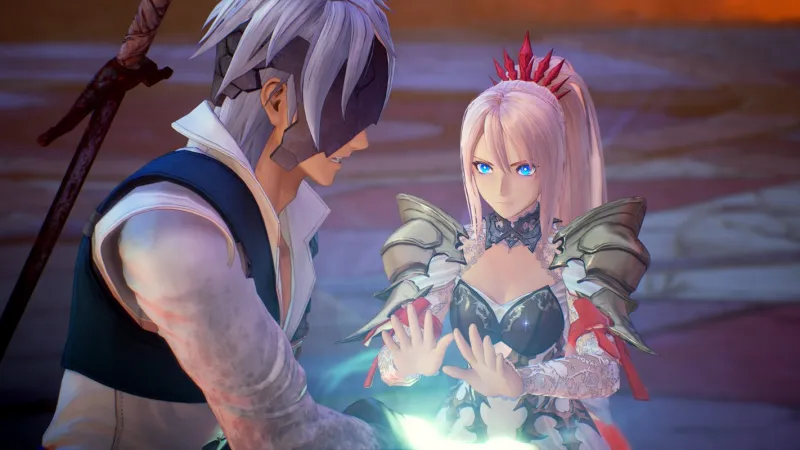
Photo: anime style video game characters emotional conversation town square RPG, via www.back2gaming.com
There's a specific kind of emotional gut-punch that only Japanese games seem to deliver. You're thirty hours into a JRPG, you've been casually chatting with the blacksmith in the town square every few hours, and then — without much warning — you learn something about his past that completely reframes every single interaction you've had with him. You didn't even realize you were being set up. And now you're sitting there, controller in your lap, genuinely affected by a guy whose name you had to look up on a wiki.
How does that keep happening? And why don't Western games pull it off nearly as often?
The Art of Saying Less to Mean More
Western RPGs, especially the prestige ones, tend to go big on NPC depth through volume. Dialogue wheels, branching conversation trees, romance meters — these are systems designed to simulate emotional investment. And they work, to a degree. But there's a ceiling. When you're picking from four pre-written responses every time you talk to someone, you're aware at all times that you're managing a relationship rather than experiencing one.
Japanese developers frequently take the opposite approach. A character might have five or six lines that rotate on a schedule, but each one is chosen with almost surgical precision. The blacksmith in a game like Dragon Quest XI doesn't deliver a TED Talk about his trauma. He says something gruff, maybe a little self-deprecating, and gets back to work. You fill in the blanks yourself. And the stuff you fill in? That's yours. That's why it sticks.
This narrative restraint is a genuine craft. It trusts players to be emotionally active participants rather than passive recipients of exposition. When you piece together a character's story from fragments, you're not just reading about them — you're constructing them. And we tend to care a lot more about things we helped build.
Animation as Emotional Shorthand
It's not just dialogue, though. One of the most underappreciated tools in Japanese game design is expressive character animation — and not in the way you might expect.
We're not talking about Hollywood-level motion capture. We're talking about the way a character in Persona 5 shifts their weight when they're uncomfortable, or how an NPC in Yakuza: Like a Dragon has a distinct walk cycle that communicates their whole personality before they say a single word. Japanese developers have spent decades refining what you might call emotional shorthand in animation — quick, readable physical cues that do the heavy lifting that dialogue would otherwise have to carry.
Sprite-based games do this too. The pixel art in Octopath Traveler is doing a remarkable amount of emotional work in a very small canvas. A slight head tilt, a change in posture, a character turning away mid-conversation — these micro-expressions communicate subtext that a wall of text could never replicate as efficiently.
Western studios are catching on, but it's taken time. For a long time, the dominant philosophy seemed to be that more polygons and more realistic facial capture would automatically equal more emotional resonance. Japanese developers proved pretty convincingly that it's about clarity of expression, not fidelity of texture.
The Power of Routine and Rhythm
Here's something worth thinking about: a lot of the NPCs you end up caring most about in Japanese games aren't the ones with dramatic backstories. They're the ones you see repeatedly, in the same place, doing the same thing, until their presence becomes part of your rhythm.
Life simulation games like Story of Seasons and Rune Factory have basically built entire franchises on this principle. The townsfolk in those games are, objectively, not complex characters. But you talk to the fisherman every morning. You notice when he seems a little down. You bring him the fish he mentioned liking. Over time, that accumulation of small, consistent interactions creates something that feels a lot like an actual relationship.
This is actually backed up by how human psychology works in real life — familiarity and routine are foundational to how we form attachments. Japanese game designers seem to have an intuitive grasp of this. By giving NPCs consistent schedules, recurring dialogue patterns, and small behavioral quirks, they create the illusion of a living person with habits and preferences. And once your brain accepts that illusion, the emotional investment follows automatically.
When the Side Character Becomes the Point
Some of the most memorable NPC storytelling in Japanese games happens completely off to the side of the main narrative. Think about the optional questlines in Final Fantasy XIV — content that has genuinely made players cry, not because of the main story beats, but because of a side character whose arc unfolds quietly over dozens of hours. Or consider the Sims-adjacent emotional depth of Stardew Valley (heavily inspired by Japanese farming RPGs), where characters like Shane or Penny have resonated so deeply with players that entire fan communities have formed around them.
What makes these characters land is the combination of everything we've talked about: restrained but precise dialogue, expressive animation, routine-based familiarity, and crucially — a sense that the character has an inner life that exists independent of the player. They're not waiting around to serve your story. They have their own thing going on, and you're just getting glimpses of it.
Contrast that with the average RPG companion in a Western open-world game, who will stand in the same spot for three hundred in-game days waiting for you to come back and ask them how they're doing. The illusion breaks. The emotional investment drains out.
What We Can Learn From Caring This Much
There's something almost embarrassing about how hard Japanese games can hit with a character who has maybe twelve total lines across a forty-hour game. You find yourself genuinely hoping things work out for the item shop owner. You feel weirdly proud when the shy kid in the village finally works up the nerve to move to the city. You're devastated when the old mentor figure doesn't make it — even though you knew, you knew, it was coming.
That's not an accident. It's craft. It's decades of developers figuring out that emotional connection isn't built through information overload — it's built through carefully chosen moments, visual expressiveness, and the space to let players bring something of themselves to the relationship.
Western game design is increasingly borrowing from this playbook, and honestly, the more the better. But there's still something distinct about the way Japanese studios approach it — a patience and a subtlety that's hard to replicate when your default instinct is to give players more options, more content, more everything.
Sometimes less really is more. And sometimes the NPC you barely talked to ends up meaning more to you than the main character ever did. If you've played enough Japanese games, you already know exactly what that feels like.