Quarters, Crowds, and Controllers: How Japan's Arcade Culture Built the Multiplayer World We Live In
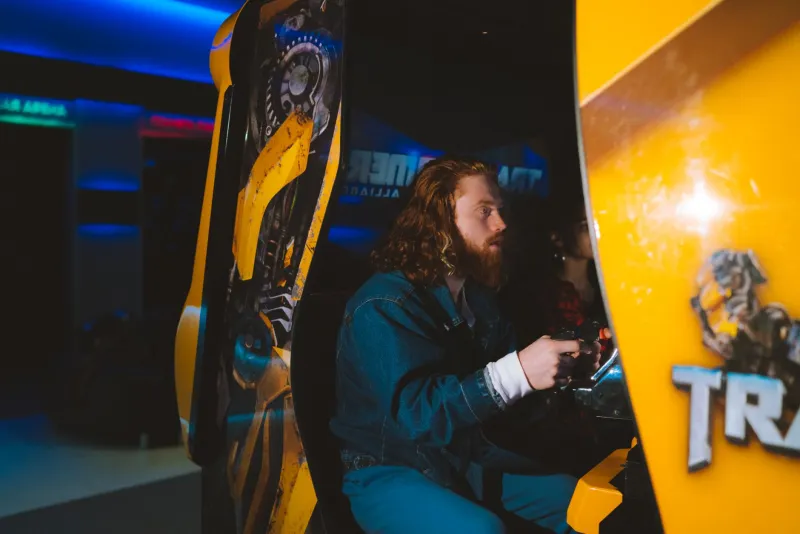
Picture this: you're standing in a fluorescent-lit room in 1992 Osaka. The smell of cigarette smoke and fried food drifts in from somewhere nearby. Six people are packed around a single Street Fighter II cabinet, watching two players go at it like it's a prizefight. Nobody needs to explain the rules of engagement. You watch, you wait, you place your quarter on the screen when you're ready to challenge. Everyone understands. That unspoken contract — that little piece of social choreography — is the invisible thread connecting those smoky Japanese game centers to every ranked ladder, every online lobby, and every tournament bracket you've ever clicked into.
Japan's arcade scene didn't just give us great games. It gave us a template for how competitive gaming should feel.
The Arcade as a Social Experiment
American arcades existed, sure. But Japan's game centers operated on a different level — culturally, architecturally, and philosophically. Companies like Taito, Capcom, and SNK weren't just building cabinets; they were designing social spaces disguised as entertainment machines. The layout of a Japanese arcade was almost intentional in the way it forced interaction. Fighters faced each other across a shared screen. Racing games lined up side by side. Even solo experiences like Galaga or Gradius became spectator sports when someone was on a hot streak.
The key insight those developers stumbled onto — or maybe engineered deliberately — was that watching someone play is almost as engaging as playing yourself. That principle sounds obvious now, in the age of Twitch and YouTube Gaming, but it was radical in 1985. Japanese arcade designers understood that the crowd around the cabinet was part of the product. The pressure of an audience made every match feel like a main event.
That's not an accident. It's design.
Instant Accessibility, Infinite Depth
Here's where Japanese arcade philosophy gets genuinely brilliant: the best cabinets were built on a two-layer structure. Layer one — you could figure out the basics in thirty seconds. Drop a quarter, press buttons, something cool happens. Street Fighter II let a total newcomer throw a punch and feel powerful immediately. Metal Slug let you shoot things and watch them explode with satisfying cartoon gore. No tutorial screens. No onboarding flows. Just go.
Layer two, though? That's where years lived. The cancel mechanics in Street Fighter. The frame-perfect jumps in Metal Slug. The intricate combo systems that players discovered not through instruction manuals but through obsessive repetition and community knowledge-sharing. Regulars at Japanese game centers would gather to watch a skilled player dissect a game's systems in real time, almost like watching a jazz musician improvise. The crowd learned by observation. Knowledge passed laterally, person to person, before the internet existed to do it faster.
Sound familiar? It should. That exact structure — easy to start, lifetime to master — is the design gospel of virtually every successful competitive multiplayer game today. Fortnite lets you drop in and shoot immediately. Mastering building mechanics takes months. League of Legends has a learning curve that starts gentle and ends somewhere near vertical. The arcade taught developers that accessibility and depth aren't opposites. They're partners.
The Quarter-on-the-Screen Economy
One of the most elegant social systems ever invented for competitive play cost nothing to implement and required zero technology: placing a quarter on the arcade cabinet screen to signal you were next in line to challenge. Simple. Universally understood. Completely self-enforcing.
That tiny ritual encoded something important about competitive gaming culture — the idea that you earn your right to compete by waiting your turn and then proving yourself. There were no matchmaking algorithms. No MMR calculations. You watched the current champion, decided you could take them, and put your money where your confidence was. Literally.
Modern ranked systems are, in a very real sense, digital recreations of that quarter economy. The Elo rating in chess-based games, the rank badges in Valorant or Street Fighter 6, the challenger tier in League — these are all formalized versions of the same primal question the arcade posed: are you good enough to take the seat? The stakes are different. The emotional weight is identical.
From Game Centers to Global Communities
When Street Fighter II crossed the Pacific and landed in American arcades and eventually living rooms, it didn't just bring a game. It brought a culture. American players absorbed the competitive framework, the character loyalty, the drive to find one fighter and master them completely. The FGC — the Fighting Game Community — is arguably the most direct living descendant of Japanese arcade culture operating in the US today. EVO, the world's premier fighting game tournament held annually in Las Vegas, is essentially a massive, formalized game center where the quarter-on-the-screen etiquette has been scaled to thousands of competitors.
But the influence spreads wider than fighting games. The "arcade loop" — that relentless cycle of attempt, failure, improvement, and retry — is baked into roguelikes, battle royales, and competitive shooters. Hades nails it. Vampire Survivors nails it. Even Call of Duty's multiplayer respawn structure echoes the arcade's fundamental promise: death isn't the end, it's just the price of another attempt.
SNK's Neo Geo cabinets, with their interchangeable cartridge systems, pioneered the idea that a platform could host a rotating roster of competitive experiences — a concept that maps almost directly onto how modern gaming storefronts and live-service games operate. The hardware model changed. The philosophy didn't.
Why It Still Hits Different
There's something a lot of Western gamers will admit quietly, maybe after their third match in an online lobby where nobody's talking and the vibe feels sterile: they miss the presence of competition. The physical reality of another human being two feet away, just as nervous, just as focused, just as desperate to win.
Japanese game centers understood that competitive gaming is fundamentally a social act. It needs witnesses. It needs stakes that feel real. It needs the moment where you win and someone nearby nods in genuine respect — or the moment you lose and have to step back and watch someone else take your spot.
The best online multiplayer experiences today — the ones that build real communities, not just player counts — tend to replicate those social conditions as faithfully as digital space allows. Ranked lobbies with voice chat. Local tournaments at your neighborhood gaming store. Couch co-op that's survived every prediction of its death. These aren't nostalgia plays. They're acknowledgments that the arcade figured something out about human nature that no algorithm has fully replaced.
Japan's golden arcade era is officially history. The game centers still exist, but the culture has migrated. It lives in every tournament bracket, every ranked climb, every moment you place your metaphorical quarter on the screen and say: I'm next.
Ganbatte.