Quiet Power: Why Japanese Games Let Silence Do the Heavy Lifting
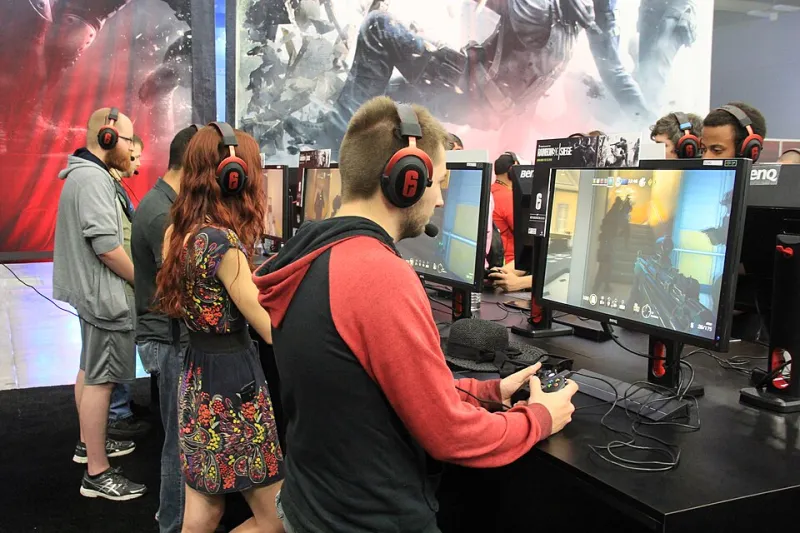
Photo: Daniel Benavides from Austin, TX, CC BY 2.0, via Wikimedia Commons
There's a moment in Mother 3 — no voice acting, no cinematic camera sweep, no swelling orchestral cue telling you exactly how to feel — where the game just stops. A character you've grown to love is gone. The screen holds still. The music drops to almost nothing. And somehow, in that absolute restraint, the game wrecks you more completely than a fully produced cutscene ever could.
That's not an accident. That's philosophy.
The Western Instinct to Fill Every Silence
If you've spent any time with big-budget Western RPGs over the last decade, you know the formula. Every major character has a voice actor. Every emotional beat comes pre-packaged with a performance telling you how to receive it. The writing, the delivery, the score — all of it is engineered to make sure you don't miss the point. It's not bad design, exactly. Games like The Witcher 3 and God of War use that approach brilliantly.
But there's a cost. When a game hands you the emotion fully assembled, your job as a player becomes passive. You're watching a story happen. You're not living inside it.
Japanese developers — particularly Nintendo, but also studios like HAL Laboratory, Game Freak, and countless indie outfits working in that tradition — have historically pushed back against that instinct. Not always out of budget constraints (though that's real too), but out of a genuine belief that what a player imagines will always be more powerful than what you can show them.
Projection Over Performance
Here's the core idea: when a character doesn't speak, you fill in the voice yourself. When their face is a few expressive pixels instead of a photorealistic render, your brain does the work of making them feel real. And because you built that version of the character in your head, the emotional stakes are personal in a way that no studio can manufacture for you.
Think about Pokémon. Your rival — whether it's Blue, Silver, or whoever — never delivers a monologue with the weight of a prestige TV drama. But generations of players have felt genuine, complicated feelings about those characters. Why? Because the game gave you just enough to project onto. The silence wasn't laziness. It was a canvas.
Or look at the original The Legend of Zelda: Breath of the Wild — a game that uses voice acting selectively, almost surgically. Link himself says nothing. And that choice, controversial as it was for some players, is precisely what makes him feel like your hero rather than someone else's protagonist you're temporarily controlling.
When Western Games Figured It Out
What's genuinely interesting is that some of the most celebrated Western indie games of the past decade have quietly absorbed this lesson and run with it.
Outer Wilds is practically a masterclass in earned silence. The game trusts you completely — no quest markers, no NPC companions chirping exposition, no voice telling you that what you just discovered is supposed to be profound. It just is. And when the ending arrives, the emotional devastation is entirely your own construction. The developers didn't hand it to you. You built it over twenty hours of curious, lonely exploration.
Return of the Obra Dinn does something similar with its silence around character. You're piecing together the fates of sixty people from fragments — brief flashes, ambient sound, environmental clues. Nobody narrates your conclusions. The game respects you enough to let the horror and the tragedy land on your own terms. That respect is deeply Japanese in spirit, even if the game came from a Western developer.
These titles aren't coincidences. They're proof that the philosophy travels.
The Emotional Efficiency of Restraint
There's also something worth saying about pacing. When a game deploys full voice acting for every line of dialogue, everything gets weighted equally. The small talk and the heartbreak arrive in the same register. But when a game is mostly quiet — text boxes, ambient sound, the occasional musical sting — and then does use voice acting or a major audio cue, it hits like a freight train.
Japanese developers understand this as a kind of emotional economy. You don't spend your big moments cheaply. You save them. And when they arrive, the contrast does half the work for you.
Look at how Undertale handles this. Toby Fox — deeply influenced by EarthBound, itself a game shaped by Shigesato Itoi's unconventional approach to game narrative — uses the absence of voice acting to build intimacy with every character. When the music swells at a crucial moment, it carries the weight of everything that came before it in silence. The restraint was the setup. The payoff is enormous.
It's Not About Budget. It's About Trust.
The easy assumption is that Japanese games — especially older ones, or indie ones — skip voice acting because it's expensive. And sure, that's sometimes true. Fully voiced games cost a staggering amount of money to produce, and smaller studios simply can't compete with AAA budgets.
But that explanation misses the point for a lot of these titles. Nintendo, for instance, could absolutely afford to fully voice every Zelda or Mario game. They choose not to — or they choose to do it partially, deliberately. That's a creative decision, not a financial limitation. It reflects a belief about what games are for and how players should relate to the characters inside them.
The philosophy is essentially this: a player who is actively interpreting is more engaged than a player who is passively receiving. Silence creates space for interpretation. Space is where emotional investment lives.
What We Lose When We Fill Every Gap
None of this is an argument that voice acting is bad or that Western games are doing it wrong. Some of the most emotionally resonant moments in gaming history are fully voiced. The point is that restraint is a tool, and it's one that Japanese developers have wielded with real intentionality for decades.
As games get bigger and production budgets balloon, there's a growing pressure to fill every silence, to polish every corner, to make sure no player ever sits with a question mark for too long. And something gets lost in that process. The invitation to feel gets replaced by instructions on how to feel.
The best Japanese games — and the Western games smart enough to borrow from them — know that the most powerful thing you can do is hand a player a quiet moment and trust them to bring something to it. Because what they bring will always be more personal, more specific, and more devastating than anything you could script.
Sometimes the loudest thing in the room is nothing at all.