Safe Haven: How Japanese MMOs and Live Service Games Became Unlikely Spaces for Healing
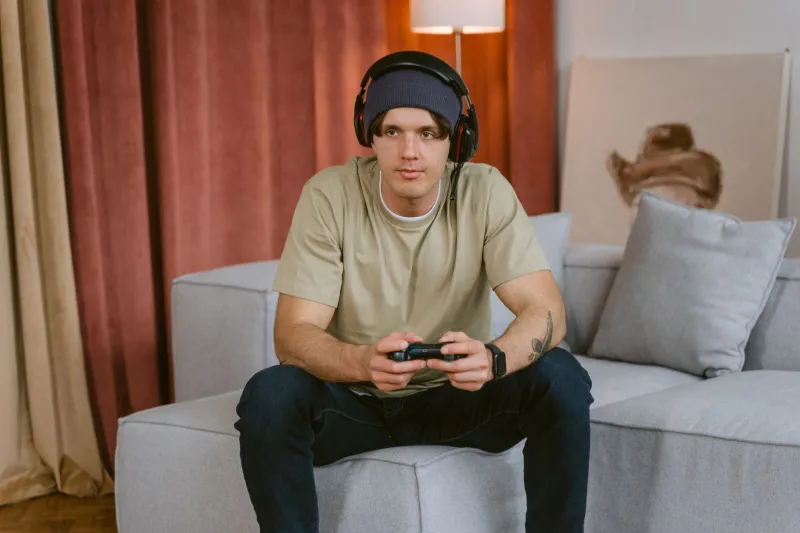
Somewhere in a suburb outside of Columbus, Ohio, a woman named Priya logs into Final Fantasy XIV every evening around 9 PM. She's not racing to clear the latest raid tier. She's not grinding for gear scores. She tends her virtual garden in her player housing plot, waves at the same handful of people she's known for three years, and sometimes just stands in Limsa Lominsa watching the sunset animation cycle.
"It sounds silly when I say it out loud," she admits. "But it's the part of my day I actually look forward to. It doesn't ask anything of me."
Priya has generalized anxiety disorder. She's been in therapy for years, takes medication, and by most measures manages her condition well. But she'll tell you, without hesitation, that FFXIV is part of her mental health toolkit in a way she never expected a video game to be.
She's not alone. Not even close.
The Architecture of a Restorative Space
To understand why Japanese MMOs and live service games have become therapeutic for so many players, you have to look at what they're actually built to do — and how that differs from the extractive design philosophy that dominates so much of the Western live service market.
The difference isn't accidental. It's architectural.
Western live service games — and this is a generalization with real exceptions — tend to be designed around urgency. Limited-time events with punishing FOMO mechanics. Battle passes that expire. Seasonal content that disappears forever if you don't engage on the developer's schedule. The emotional engine running under these systems is anxiety. Miss out. Fall behind. Keep up or lose access.
For someone already managing an anxiety disorder, that design language isn't just unfun. It can be genuinely harmful.
Now look at how Final Fantasy XIV handles its content cadence. Old raids don't disappear — they get added to duty roulettes and remain accessible indefinitely. Story content doesn't expire. Housing exists as a pure creative and social space with no mechanical pressure attached. The game has a specific "undersized party" option that lets you go back and experience older content at your own pace with your own friends. The message embedded in that design is: we'll wait for you.
That message lands differently for players who feel like the rest of their lives never slow down.
Monster Hunter and the Meditative Loop
Monster Hunter operates on a completely different model than an MMO, but it generates a similar kind of psychological safety through a different mechanism: the loop.
The core Monster Hunter experience — prepare, hunt, harvest, upgrade, repeat — is deeply rhythmic. It has a beginning, middle, and end that fits inside a session of any length. You can play for twenty minutes or four hours and feel a complete cycle of effort and reward either way. The game doesn't punish you for stopping. It doesn't push notifications to your phone. It doesn't have a login streak mechanic designed to make you feel guilty for taking a week off.
For players with depression, that structure is meaningful. Depression frequently attacks motivation and makes open-ended tasks feel insurmountable. A game that says "here is a specific thing, here is how long it will take, here is your reward" is a game that works with the depressed brain rather than against it.
"Monster Hunter was the first game I could play during a bad episode," says Marcus, a 31-year-old from Atlanta who has dealt with treatment-resistant depression for most of his adult life. "It never made me feel behind. It never made me feel like I was failing. I just hunted. That was enough."
The Social Design That Doesn't Punish Introversion
One of the quietly brilliant things about how Japanese multiplayer games handle social interaction is that they tend to make it optional in a way that feels generous rather than isolating.
In FFXIV, you can spend hundreds of hours in the main story campaign in almost complete solitude if you choose. When you do enter multiplayer content, the duty finder system means you never have to organize anything yourself — the game handles matchmaking, and the content is designed so that a group of strangers can succeed together without needing to communicate extensively. You can nod, use emotes, and occasionally type a "gg" at the end of a run and have a completely positive social experience.
For players with social anxiety, this is significant. The game offers genuine community — Free Companies (guilds), housing neighborhoods, player-run events, Discord servers with thousands of members — but none of it is mandatory. You can wade in at whatever depth feels safe.
The Monster Hunter lobby system works similarly. You can hunt solo. You can join a public lobby and hunt alongside strangers with minimal communication. You can build a tight crew of regulars. The game supports all of it equally, without making any one mode feel like the "real" way to play.
What Developers Are (and Aren't) Saying About This
It's worth noting that Japanese developers rarely market their games explicitly as mental health tools. Naoki Yoshida, the producer who rescued FFXIV from its disastrous 1.0 launch and rebuilt it into one of the most beloved MMOs ever made, has spoken frequently about creating a game where players feel welcomed and respected — but the therapeutic dimension of that design tends to emerge from player experience rather than developer intent.
That might actually be part of why it works. Games designed to be explicitly therapeutic can sometimes feel clinical or patronizing. A game designed with genuine care for the player's time and emotional experience, without announcing that care loudly, tends to feel like a place you actually want to be.
The ganbatte spirit — the Japanese concept of doing your best, of persisting with heart — is embedded in how these games treat failure, progress, and community. You're not punished for not being the best. You're encouraged to keep going at your own pace. In a gaming landscape that often weaponizes competition and comparison, that ethos hits different.
This Isn't a Replacement for Professional Support
Let's be clear about something important: no video game is a substitute for therapy, medication, or professional mental health care. If you're struggling, please reach out to a professional. The National Alliance on Mental Illness (NAMI) helpline is available at 1-800-950-NAMI for anyone who needs support.
But the reality is that mental health support exists on a spectrum, and the spaces where we find routine, community, low-stakes accomplishment, and genuine rest matter. For a lot of people — more than the industry probably realizes — Japanese MMOs and live service games have quietly become some of those spaces.
Priya is still in her garden in Limsa Lominsa. Marcus just finished a tempered elder dragon hunt. And somewhere, a new player is logging into FFXIV for the first time, not knowing yet that this strange, beautiful game might become something they genuinely need.
That's worth paying attention to.